Women’s Hormone Health & HRT
Support for perimenopause, menopause, thyroid health, libido, sleep, weight, mood, skin, and vitality.
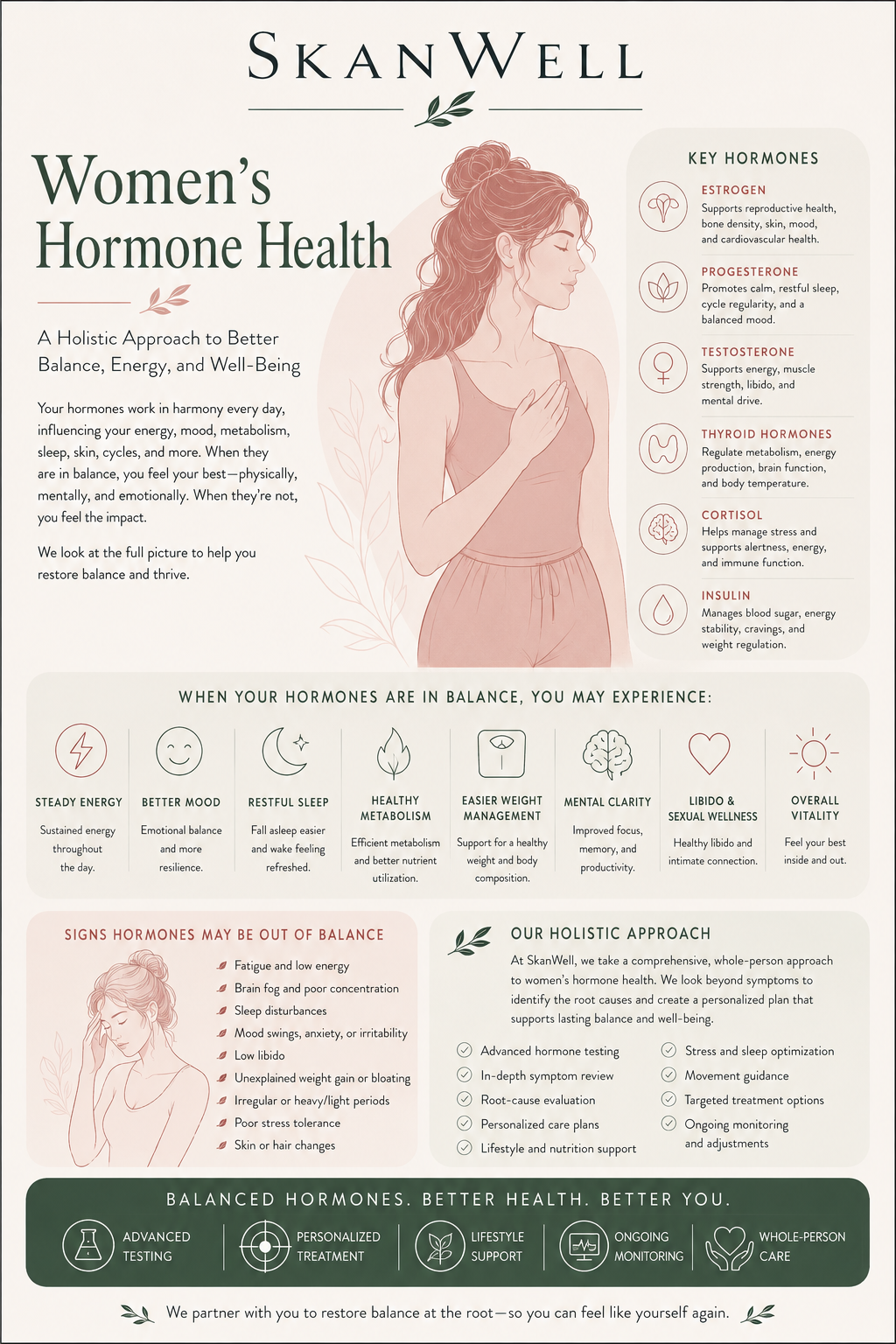
Women’s hormone changes can affect nearly every part of daily life: sleep, energy, mood, libido, weight, body composition, skin, temperature regulation, focus, and confidence.
At SkanWell, women’s hormone health is approached with time, education, clinical evaluation, and personalized treatment planning. Care may include support for perimenopause, menopause, hormone replacement therapy, testosterone therapy when appropriate, thyroid evaluation, body composition tracking, medical weight management, skincare, wellness support, and follow-up care.
SkanWell serves women in Camillus, Syracuse, and throughout Central New York.

You deserve to be heard.
Many women are told that symptoms are “normal,” “just aging,” or something they simply need to tolerate.
At SkanWell, we take a different approach.
Hot flashes, night sweats, poor sleep, brain fog, weight changes, low libido, mood changes, fatigue, skin changes, joint discomfort, and changes in body composition can be frustrating, disruptive, and deeply personal.
Hormones may not explain everything, but they are worth evaluating thoughtfully. SkanWell helps women understand what may be changing, what options may be appropriate, and how hormone health can connect with weight, skin, energy, sleep, confidence, and long-term vitality.

Hormone support through different stages.
Perimenopause
Perimenopause can begin years before menopause. Hormone fluctuations during this stage may contribute to irregular cycles, poor sleep, mood changes, hot flashes, night sweats, weight changes, brain fog, low libido, and changes in energy.
SkanWell helps women understand symptoms, options, and whether hormone-focused support may be appropriate.
A broader look at women’s hormone health.
Women’s symptoms are rarely one-dimensional. SkanWell takes a more complete view of hormone health by considering symptoms, health history, goals, labs when appropriate, medications, lifestyle, and clinical suitability.
Estrogen
Estrogen changes may contribute to hot flashes, night sweats, sleep disruption, vaginal dryness, urinary symptoms, skin changes, and other menopause-related concerns.
Progesterone
Progesterone may be part of the conversation for women using estrogen therapy, women with a uterus, and women experiencing certain perimenopause or sleep-related concerns.
Testosterone
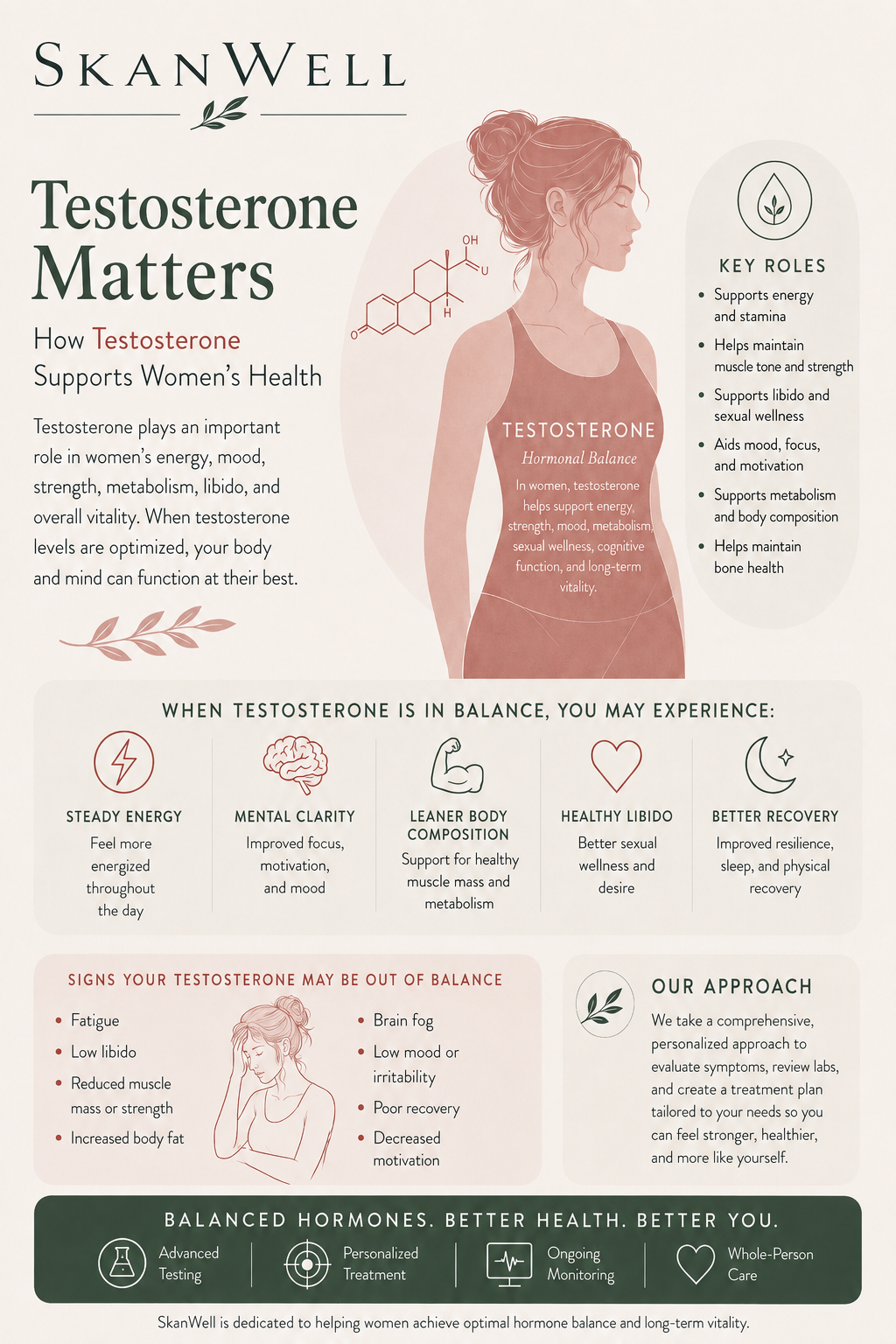
Women produce testosterone too. Testosterone may be discussed in relation to libido, sexual satisfaction, energy, motivation, mood, and overall vitality when clinically appropriate.
Testosterone is not just a men’s hormone.
Women naturally produce testosterone in smaller amounts than men. For some women, changes in testosterone may be part of a broader conversation about libido, sexual satisfaction, motivation, energy, mood, and vitality.
At SkanWell, testosterone therapy for women may be discussed when symptoms, goals, clinical context, and provider judgment support evaluation.
This care requires a thoughtful approach. Testosterone therapy for women should be individualized, appropriately dosed, monitored, and discussed in the context of potential benefits, risks, side effects, and alternatives.
SkanWell’s goal is to help women feel informed, respected, and supported - not rushed into a trend.
Hormones, weight, and body composition are connected.
Many women notice changes in weight, body shape, muscle tone, and metabolism during perimenopause, menopause, and post-menopause.
These changes can feel frustrating, especially when old habits no longer produce the same results.
At SkanWell, women’s hormone health can connect with medical weight management, GLP-1 support when clinically appropriate, body composition tracking, nutrition support, protein guidance, wellness products, and long-term follow-up.
Beyond the scale
Body composition tracking can help show changes in muscle mass, body fat, hydration, and overall progress.
Muscle matters
Maintaining muscle is important for metabolism, strength, longevity, and healthy aging.
Support over time
SkanWell helps women build plans that can evolve as symptoms, goals, labs, and progress change.
Hormone health can affect how you feel in your skin.
Hormonal changes may influence skin dryness, texture, collagen support, acne, hair changes, body composition, and overall confidence.
SkanWell’s connected care model allows women to address hormone health while also supporting skin quality, aesthetic confidence, and long-term maintenance.
Depending on your goals, your care may connect with medical-grade skincare, injectables, laser treatments, RF microneedling, facials, chemical peels, dermaplaning, or other skin-focused services.
The goal is not to look different. The goal is to feel refreshed, supported, and more like yourself.
Post-Menopause and Long-Term Vitality
Hormone health remains important after menopause. Women may continue to experience symptoms related to sleep, libido, vaginal health, weight, skin, energy, bone health, or body composition.
SkanWell focuses on long-term wellness, symptom management, prevention-minded care, and quality of life.
Common concerns women bring to SkanWell
Women may seek hormone health evaluation for concerns such as:
Hot flashes
Night sweats
Poor sleep
Brain fog
Low energy
Mood changes
Anxiety or irritability
Weight gain
Difficulty losing weight
Low libido
Vaginal dryness or discomfort
Changes in skin quality
Hair or skin changes
Joint discomfort
Loss of muscle tone
Changes in body composition
Menopause symptoms
Perimenopause symptoms
Thyroid-related symptoms
These symptoms can have multiple possible causes. A consultation helps determine whether hormone therapy, thyroid evaluation, medical weight management, skincare, wellness support, or another care pathway may be appropriate.
Menopause
Menopause is a major hormonal transition. Women may experience changes in temperature regulation, sleep, sexual health, metabolism, mood, skin, bone health, and body composition.
SkanWell provides consultation and treatment planning for women who may benefit from hormone replacement therapy, thyroid review, wellness support, or a broader vitality plan.
Thyroid Function
Thyroid changes can affect weight, energy, mood, temperature regulation, digestion, heart rate, hair, skin, and metabolism. Thyroid symptoms can overlap with perimenopause and menopause symptoms.
Metabolic Health
Blood sugar regulation, insulin resistance, body composition, sleep, stress, nutrition, and muscle mass may all influence weight, energy, and long-term wellness.
Body Composition
Body composition tracking can help women better understand changes in muscle mass, body fat, hydration, and progress beyond the scale.
Hormone and Wellness Treatment Options
Hormone Replacement Therapy / HRT
For appropriate patients, hormone replacement therapy may be considered as part of a personalized plan for perimenopause, menopause, or post-menopause symptoms.
HRT is not right for everyone. Recommendations depend on symptoms, health history, risk factors, menopause stage, goals, and provider evaluation.
Estrogen Support
Estrogen therapy may be discussed for symptoms such as hot flashes, night sweats, sleep disruption, vaginal dryness, urinary symptoms, and other menopause-related concerns.
When appropriate, estrogen therapy is considered within the context of each patient’s health history, personal goals, and risk profile.
Progesterone Support
For women with a uterus who use systemic estrogen therapy, progesterone or a progestogen may be needed for endometrial protection.
Progesterone may also be discussed in relation to sleep, cycle changes, perimenopause symptoms, and menopause care depending on the patient’s clinical picture.
Testosterone Therapy for Women
Testosterone therapy may be considered for some women when symptoms, goals, clinical context, and provider judgment support evaluation.
This may be part of a conversation around libido, sexual satisfaction, motivation, energy, mood, and vitality. Testosterone therapy for women should be individualized, carefully dosed, monitored, and reviewed over time.
Thyroid Evaluation and Support
Thyroid dysfunction can overlap with many hormone-related symptoms. SkanWell may evaluate thyroid function when clinically appropriate and help determine whether additional care, medication review, treatment planning, or coordination with another provider may be needed.
Vaginal and Sexual Health Support
Hormone changes may affect vaginal comfort, lubrication, urinary symptoms, sexual comfort, and libido.
Depending on symptoms and clinical suitability, care may include hormone-based or non-hormone options, education, referral when needed, and follow-up support.
Medical Weight Management
Perimenopause and menopause can change how the body stores fat, preserves muscle, responds to lifestyle habits, and regulates appetite.
SkanWell may connect women’s hormone health with medical weight management, GLP-1 support when clinically appropriate, body composition tracking, nutrition support, and long-term follow-up.
Wellness Injections, IV Therapy, and Nutraceuticals
Some women may benefit from wellness injections, IV therapy, protein support, supplements, or nutraceuticals as part of a broader plan for energy, recovery, hydration, nutrient support, and consistency.
Skin, Hair, and Confidence Support
Hormone changes may influence skin dryness, collagen changes, texture, hair changes, body composition, and confidence.
SkanWell can connect hormone health with medical-grade skincare, injectables, lasers, facials, RF microneedling, and aesthetic maintenance when appropriate.

Thyroid symptoms can look like hormone symptoms.
Thyroid dysfunction can overlap with many concerns women experience during perimenopause and menopause.
Fatigue, weight changes, mood changes, brain fog, hair changes, dry skin, temperature sensitivity, constipation, heart-rate changes, and changes in energy may all raise questions about thyroid health.
SkanWell does not assume every symptom is caused by menopause, estrogen, progesterone, testosterone, or thyroid function alone. Instead, we look at the full picture and determine whether thyroid labs, medication review, follow-up, or coordination of care may be appropriate.
The goal is not to “optimize” thyroid numbers without clinical reason. The goal is to identify and support thyroid dysfunction when it is present and relevant.
How It Works
1. Start with your story
Your visit begins with a conversation about symptoms, goals, cycle history, menopause stage, sleep, mood, libido, energy, weight, skin, medications, health history, and what has changed over time.
2. Review clinical context
When appropriate, evaluation may include lab work, thyroid markers, hormone-related markers, metabolic labs, medical history review, medication review, and discussion of risk factors.
3. Build a personalized plan
Your plan may include hormone therapy, thyroid support, testosterone therapy when appropriate, medical weight management, body composition tracking, wellness injections, IV therapy, nutraceuticals, skincare, or other supportive care.
4. Follow and adjust
Women’s hormone health often requires follow-up. SkanWell supports symptom review, lab monitoring when appropriate, treatment adjustments, body composition tracking, and ongoing education.


Why SkanWell
A more complete approach to women’s hormone health.
We listen first
Women’s symptoms deserve time and attention. SkanWell starts with your story, not assumptions.
We connect the dots
Hormones, thyroid function, weight, sleep, libido, skin, and body composition often overlap. SkanWell helps organize the bigger picture.
We personalize care
There is no one-size-fits-all hormone plan. Recommendations depend on symptoms, history, labs, risk factors, treatment suitability, and patient goals.
-
Yes. SkanWell offers evaluation and treatment planning for women who may be candidates for hormone replacement therapy when clinically appropriate.
-
No. Hormone therapy is not appropriate for every patient. Recommendations depend on symptoms, health history, risk factors, menopause stage, goals, clinical evaluation, and provider judgment.
-
Yes. Testosterone therapy may be discussed for women when clinically appropriate. It is not right for every patient and should be individualized, carefully dosed, and monitored.
-
Women produce testosterone naturally. Changes in testosterone may be part of a broader conversation about libido, sexual satisfaction, energy, motivation, mood, and vitality for some patients.
-
When clinically appropriate, SkanWell may evaluate thyroid function because thyroid symptoms can overlap with menopause, perimenopause, fatigue, weight changes, mood changes, and brain fog.
-
Common concerns include hot flashes, night sweats, poor sleep, mood changes, brain fog, fatigue, low libido, vaginal dryness, weight changes, changes in body composition, and skin changes.
-
Hormone changes may contribute to weight and body composition changes, but weight is usually multifactorial. SkanWell may connect hormone care with medical weight management, body composition tracking, nutrition support, and wellness planning.
-
Some services may require labs, while others may not. The need for testing depends on your symptoms, health history, treatment goals, and provider recommendation.
-
Yes. Women’s hormone health can connect with skincare, injectables, lasers, facials, RF microneedling, medical weight management, wellness injections, and body composition tracking depending on your goals and clinical suitability.
-
No. SkanWell supports women through perimenopause, menopause, post-menopause, and other hormone-related concerns when clinically appropriate.
-
SkanWell may evaluate thyroid function when clinically appropriate and help determine whether thyroid-related care, medication review, or monitoring may be needed.
Feel heard. Feel informed. Feel more like yourself.
If you are experiencing changes in sleep, energy, mood, libido, weight, skin, thyroid symptoms, or overall vitality, SkanWell can help you begin with a thoughtful women’s hormone health consultation.
Medical Note
Hormone therapy, testosterone therapy, thyroid-related care, medical weight management, and wellness treatments are not appropriate for every patient. Services are provided only when clinically appropriate following evaluation. Individual results vary.